YouTube Monetization Service for International Creators
The YouTube Partner Program eligibility bar is identical everywhere in the world — what's different for a creator outside India is the tax paperwork, the payout setup, and the growth strategy needed to compete in higher-advertiser-demand markets. Apensia handles the full YPP monetization application, the Form W-8BEN tax setup Google requires from every non-US creator, and ongoing channel digital promotion — real client channels below, not a template.
Based in Chandigarh, India · working with creators worldwide, remote-first
One global bar — the eligibility criteria don't change by country
A channel qualifies for the YouTube Partner Program the same way whether its creator is in Toronto, London, Auckland or Mumbai: 1,000 subscribers with 4,000 watch hours in the trailing 12 months, or 1,000 subscribers with 10 million Shorts views in the trailing 90 days, plus standard account-standing checks — no active strikes, 2-Step Verification enabled, and residency in a country where YPP is available. What genuinely differs for an international creator isn't the bar itself, it's everything that happens after clearing it.
YouTube's own blog has also confirmed those thresholds roughly double for new creators from 1 February 2027. That change applies worldwide too, and it's covered in full detail — sources, the exact before/after numbers, and what it means for a channel still building toward the threshold — in a dedicated write-up rather than repeated here: YouTube monetization requirements are changing in 2027.
What's actually different: US tax paperwork, for every non-US creator
This is the part of YouTube monetization that has nothing to do with content and everything to do with where a creator lives — and it applies to every monetizing creator outside the United States, not just a specific region. Google's own tax help documentation states it plainly: "All monetizing creators on YouTube, regardless of their location in the world, are required to provide tax info." Skip it, and Google may withhold up to 24% of total earnings worldwide — not 24% of US-sourced earnings specifically, the whole payout.
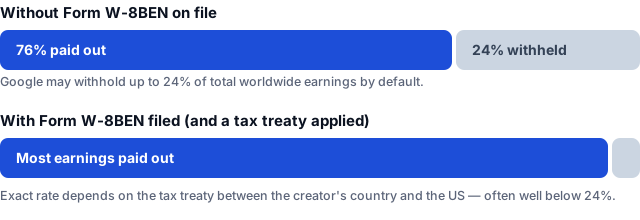
Filed by individual creators outside the US. Entities (companies, LLCs) file the related W-8BEN-E instead.
A valid tax treaty between a creator's country and the US can reduce the withholding rate below the 24% default — worth checking rather than assuming the maximum applies.
Google requires this info to be resubmitted every few years, or sooner if a creator's circumstances (country, entity type) change.
This is real, avoidable revenue loss for a channel that otherwise did everything right on the content side. Apensia's monetization service includes getting this form filed correctly as part of the same process as the Partner Program application itself, rather than leaving a creator to discover the 24% deduction on their first payout.
The 24% figure isn't the same for every country — here's what actually changes
The 24% withholding described above is the default backup withholding rate applied to a creator's total earnings worldwide when no US tax information is on file at all. Once Form W-8BEN is filed and a valid tax-treaty benefit is claimed, YouTube's own help documentation is specific that the reduced rate applies to royalty revenue earned from viewers in the United States — which it categorizes as "Other Copyright Royalties" — and that rate depends on which country's treaty with the US applies. It is not the same number for every country, and it should not be presented as one:
- Tax form
- Form W-9 (not W-8BEN) — a US creator isn't a foreign taxpayer, so the treaty question doesn't apply
- Payout currency
- USD
- AdSense threshold
- $100
- Treaty royalty rate
- 0%
- Payout currency
- GBP
- AdSense threshold
- £60
- Treaty royalty rate
- 0%
- Payout currency
- CAD
- AdSense threshold
- C$100
- Treaty royalty rate
- 5%
- Payout currency
- AUD
- AdSense threshold
- A$100
Those treaty rates are the "Copyrights" column of the IRS's own published treaty-rate table, for the category YouTube itself uses for Partner Program earnings — not a number estimated for this page. New Zealand, where one of the client channels featured below is based, sits on the same 5% copyright-royalty rate as Australia under the US–New Zealand treaty, paid out in NZD above a $130 AdSense threshold.
In practice: a UK or Canadian creator who files Form W-8BEN and claims the treaty benefit pays $0 US withholding on royalty revenue from US viewers, not a reduced amount — a meaningfully different outcome from the 24% default, and one worth getting the paperwork right for. An Australian or New Zealand creator's rate lands at 5%, still far below the 24% default. This is also, deliberately, why this is one page with a table rather than four near-identical country pages each repeating the same W-8BEN explanation with a different flag at the top — the numbers differ; the explanation of how the treaty works doesn't need to.
Every way a monetized channel actually earns
Ad revenue is the one people ask about first, but it's one of five distinct revenue features YouTube unlocks for an approved YouTube Partner Program channel, per YouTube's own Creator pages. Apensia's channel promotion work is built to activate more than just the first one.
A share of ad revenue on videos and Shorts, plus a share of YouTube Premium subscribers' watch-time payouts — the core, unlocked at the standard YPP threshold.
Recurring paid access to exclusive perks for a channel's most dedicated viewers. Requires the channel isn't set as "made for kids" and is available in an eligible country.
Fans pay to highlight a message in live chat or react to a video. Not available on age-restricted, unlisted/private, or made-for-kids content.
Tools for tagging and selling products directly from videos and Shorts — affiliate links and brand-deal tools built into the same Creator dashboard.
YouTube's own creator-brand matching tools for sponsored collaborations, separate from the AdSense-paid revenue streams above.
One caveat worth being direct about: YouTube's help pages describe channel memberships and Supers as requiring a channel to first meet YouTube's "minimum requirements for fan funding features" — without publishing the exact number on the pages checked for this page. Where that number isn't confirmed, it isn't stated here as fact.
Does a creator's country affect how much YouTube pays?
Partly, and it's worth being precise about which part. YouTube does not publish an official per-country rate table, so any exact figure quoted for "average RPM in the US" versus elsewhere should be read as a third-party estimate, not an official YouTube number. What's consistently reported, and consistent with how digital advertising works generally, is that markets with stronger advertiser demand — commonly the US, UK, Canada and Australia — tend to produce higher ad rates than the global average, because advertisers in those markets are paying more to reach those audiences.
What matters at least as much, and is far more within a creator's control than audience geography: content niche, average view duration and retention, video length and ad-break placement, and whether Shorts or long-form carries most of the watch time. Apensia's channel promotion work focuses on the levers that are actually controllable — metadata, retention, upload consistency and format strategy — rather than promising a location-driven number no agency can guarantee.
How the process actually runs, start to finish
Free eligibility check
Subscriber count, watch hours or Shorts views, and account standing reviewed against the current thresholds before anything is submitted.
Partner Program application
Submitted through the channel's own YouTube Studio account. If the first submission is rejected, the appeal is handled rather than treated as a dead end.
Tax & payout setup
Form W-8BEN filed correctly and AdSense linked, so the first payout isn't reduced by avoidable US withholding.
Channel digital promotion
Metadata, tags, thumbnails and upload consistency — the ongoing work of growing the audience the monetization is meant to earn from.
Review & adjust
Retention and format performance reviewed against what's actually working, not a fixed template applied to every channel regardless of niche.
Real client channels, not a template
Three of Apensia's monetization clients particularly reflect an international audience — an AI-education channel, an AI-music studio, and a family-vlog channel based in New Zealand. Each received full YPP monetization support and ongoing channel digital promotion.
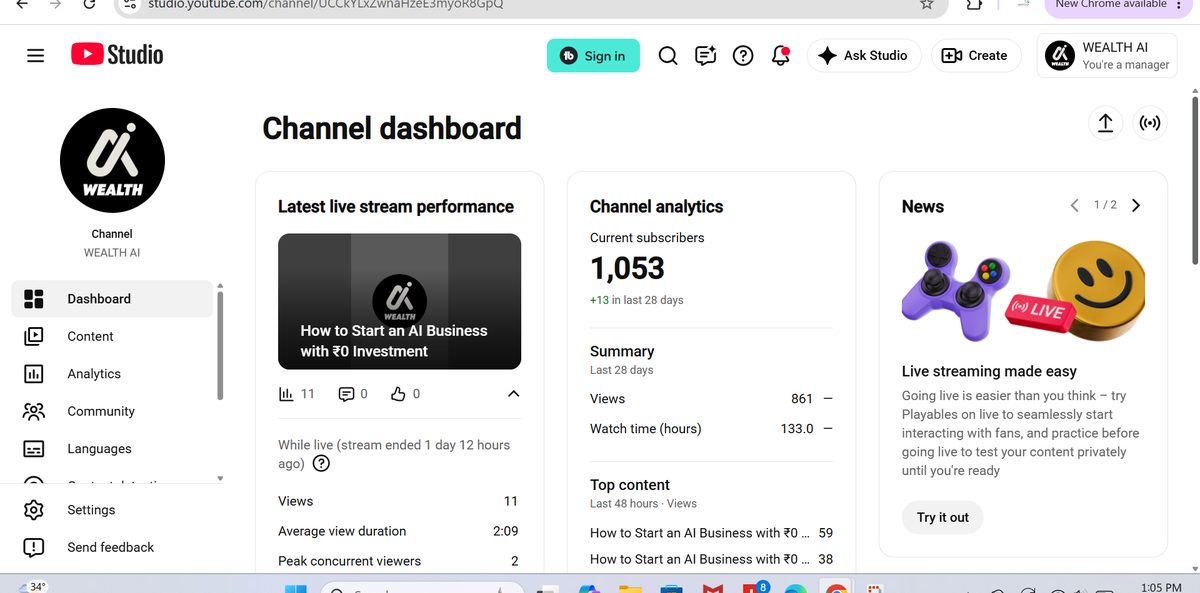
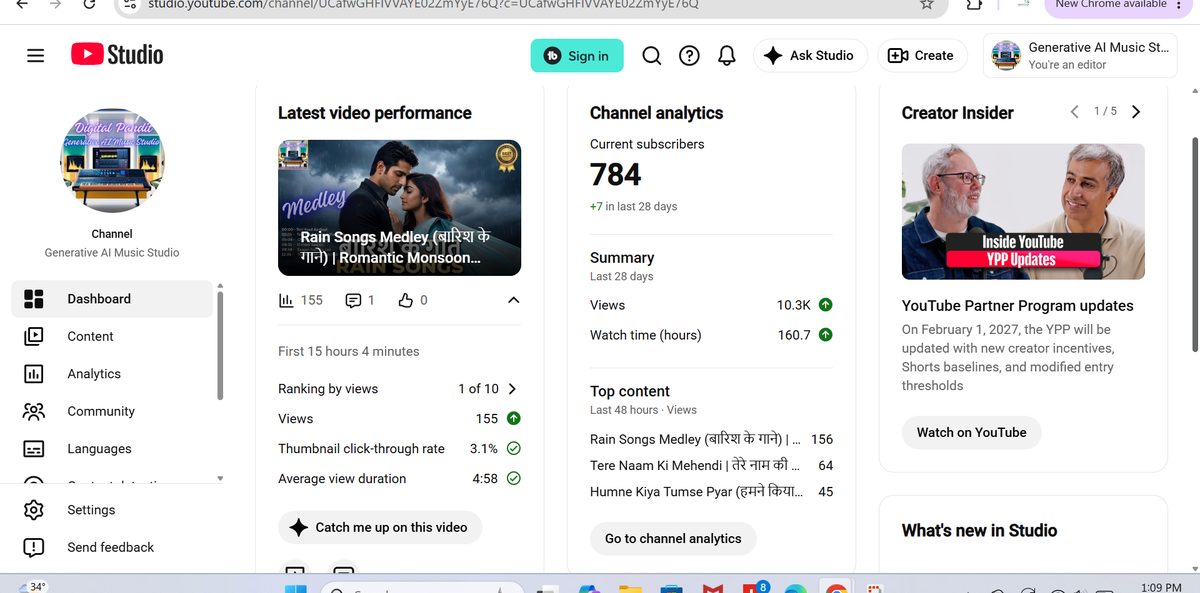
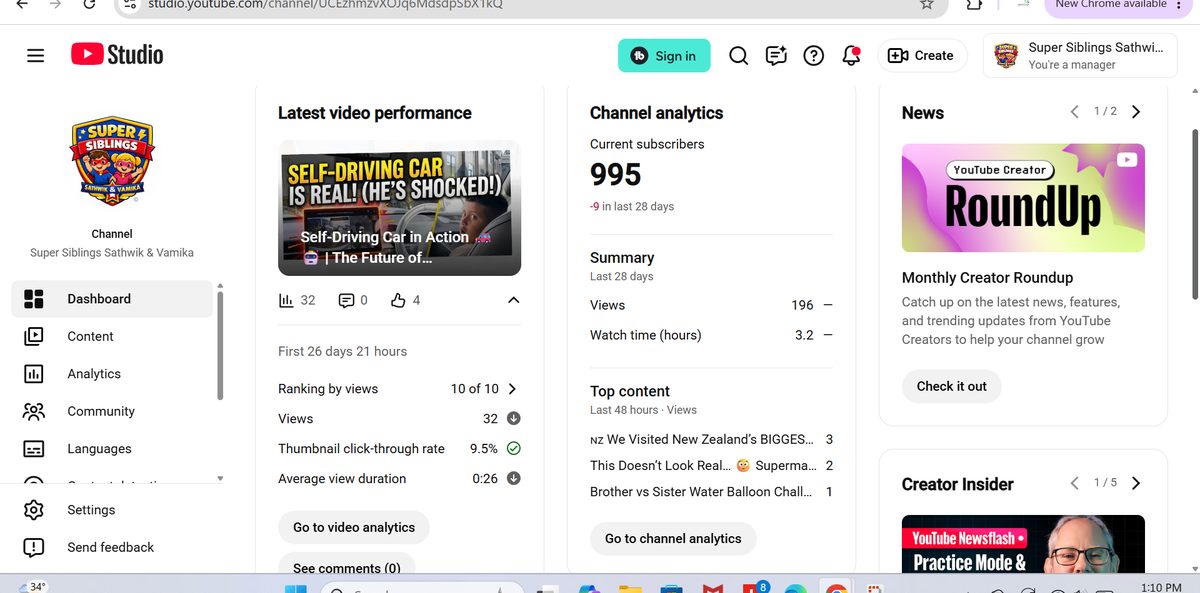
More client channels, including a 24/7 news network and a Bengali poetry/music channel, are covered in the full client case-study write-up.
What "full YPP monetization and channel promotion" covers
- Eligibility review against the current thresholds and account-standing requirements before applying.
- Partner Program application submission, and handling the appeal if the first submission is rejected — common even for channels that clear the numeric bar.
- Tax form setup — W-8BEN/W-8BEN-E filed correctly, so payouts aren't reduced by avoidable US withholding.
- Channel digital promotion — metadata and tag optimization, title and thumbnail strategy, upload consistency, and cross-platform promotion.
For creators based in India specifically, the dedicated YouTube monetization service page covers PAN-India pricing, city-specific service areas, and a full FAQ with 40+ questions.
FAQ
Are YouTube monetization requirements different outside India?
No. YouTube Partner Program eligibility is the same worldwide: 1,000 subscribers with 4,000 public watch hours in the trailing 12 months, or 1,000 subscribers with 10 million public Shorts views in the trailing 90 days, plus standard account-standing checks. What differs by country is tax paperwork and payout setup, not the eligibility bar itself.
Do international creators need to submit a US tax form to get paid on YouTube?
Yes. Google's own help documentation states that all monetizing YouTube creators worldwide are required to submit tax information, and individuals outside the US submit Form W-8BEN (entities submit W-8BEN-E). Without it, Google may withhold up to 24% of total earnings worldwide. A valid tax treaty between the creator's country and the US can often reduce that withholding rate.
How do I apply for YouTube monetization online?
Once a channel meets the subscriber and watch-hour (or Shorts-view) thresholds, the creator applies directly inside YouTube Studio under Earn, which checks eligibility and submits the channel for YouTube's review. There's no separate external application — the process runs through the creator's own YouTube Studio account, with AdSense linked for payouts.
Does a creator's country affect how much YouTube pays per view?
A viewer's location affects ad rates more than the creator's location does — advertiser demand is generally reported as stronger in markets like the US, UK, Canada and Australia, which tends to lift RPM for channels with audiences there. YouTube does not publish official per-country rate tables, and content niche, audience retention and ad format typically affect earnings more than geography alone.
Are YouTube monetization requirements changing in 2027?
Yes, for new creators. YouTube's own blog confirms that from 1 February 2027, new channels applying to the Partner Program will need 8,000 watch hours in the trailing 365 days, or 20 million Shorts views in the trailing 90 days — double the current thresholds. Existing YPP members are unaffected by this entry-requirement change.
Does the YouTube Partner Program include more than ad revenue?
Yes. Approved YPP channels can access five distinct revenue features per YouTube's own Creator pages: ads and YouTube Premium revenue, channel memberships, Super Chat/Super Stickers/Super Thanks, YouTube Shopping, and brand partnership tools. Channel memberships and Supers additionally require the channel not be set as made for kids and to be available in an eligible country.
Do tax treaty rates for YouTube earnings differ by country?
Yes. YouTube categorizes Partner Program earnings from US viewers as copyright royalties, and the reduced treaty rate that applies once Form W-8BEN is filed depends on the specific tax treaty between a creator's country and the US. Per the IRS's own treaty rate table, that rate is 0% for the United Kingdom and Canada, and 5% for Australia and New Zealand — all well below the 24% default backup-withholding rate that applies with no tax form on file at all.
Media contact: apensiapr@gmail.com · +91 81468 55589
Sources: YouTube Help — Partner Program overview & eligibility · YouTube Blog — Partner Program updates for 2027 · YouTube Help — Submitting US tax info to Google · YouTube Help — US tax requirements for YouTube earnings (royalty categorization & treaty example) · IRS — Tax Treaty Table 1 (withholding rates on royalties by country) · Google AdSense Help — Payment thresholds by currency · YouTube for Creators — Ways to earn · YouTube for Creators — Partner Program · YouTube Help — Channel memberships · YouTube Help — Super Chat & Super Stickers eligibility. Accessed September 27, 2026; figures may change after this date.